By Derek Harper
Newsletters can grow your audience, and they draw in readers before they’re led to stories behind a paywall.
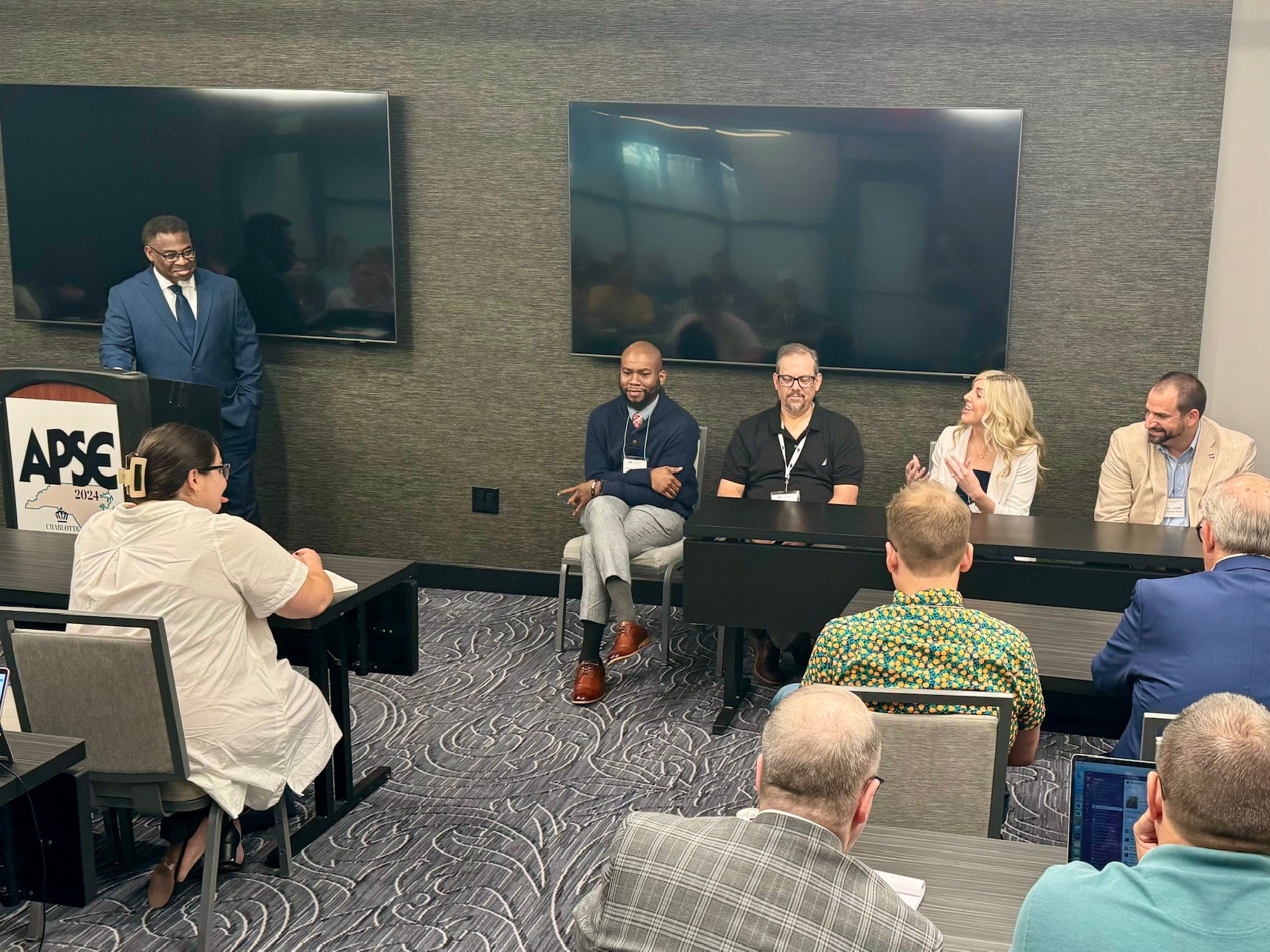
That was a sentiment expressed by Gary Potosky, assistant managing editor for sports at the Philadelphia Inquirer, on Friday during a panel discussion at the APSE Summer Conference in Charlotte, N.C.
The panel included Potosky; Tory Barron, a senior editor at ESPN.com; James Jackson, an NBA editor with The Athletic and producer of the Bounce newsletter; and Austin Karp, managing editor for the Sports Business Journal. The discussion was moderated by Damon Sayles, a Culture editor at The Athletic.
“With the ability to lead to stories behind paywalls, newsletters drive content and can lead to subscriptions,” Potosky said.
Barron said newsletters are an excellent way to expand your audience.
“We did a study of newsletter subscribers and found that over 70% of our newsletter subscribers did not identify as regular users of the ESPN app or ESPN.com,” Barron said.
Jackson said newsletters should include hyperlinks, and they should show some personality. One example he gave of straying from typical sports coverage was when they ranked fast-food restaurants during a slower time for news.
Along these lines, newsletters can be different from your typical story with how they allow you to be emotional and appeal to readers in that way. You’re able to write it in your voice even if you’re pinch-hitting for the normal newsletter writer.
However, one important thing for those who produce newsletters to keep in mind is to not overload readers’ inboxes. One newsletter per week allows you to stay in a minimum time frame between alerts or notifications.
As far as when and how often newsletters should be published, there’s no correct answer. Jackson said during the season they publish four times a week, but it slows to twice a week during the offseason.
Another important item the panel addressed is how credibility is everything.
Karp manages the Sports Business Journal’s newsletters, including verticals on media, colleges, esports, tech, football and sports betting. With everything the verticals include, he said it shows that newsletters can focus on any topic in sports.
“We just found out that there was really an interest in diving really into certain subjects,” Karp said.
They started out with the media and colleges, because they knew people were interested in that space.
“It was really well-received from jump street,” Karp said.
For the Sports Business Journal, Karp said their frequency was two days a week until COVID hit, and they stopped because there wasn’t much to report on thanks to the sports world’s shutdown.
However, after that they were able to recover and now have a new newsletter called The SBJ Contact.
“It’s a mix of stuff you may have missed earlier,” Karp said. “It’s stuff that may have happened after the markets closed.”
Since then, they’ve expanded into marketing and sports betting, technology and football. They tried e-sports, but there wasn’t much success.
This shows newsletters can also be a testing ground for different angles and products.
ESPN no longer sends out The Daily, but it was a comprehensive look at everything happening in the sports world according to Barron.
“It was a conversation with a friend in the morning getting you up to speed,” Barron said.
She noted it included humor, self-deprecation, hopefully some insights and heavy-hitting stats that interested people.
The bottom line from Potosky, Barron, Jackson and Karp was that newsletters can be a service to readers.