By John Riker
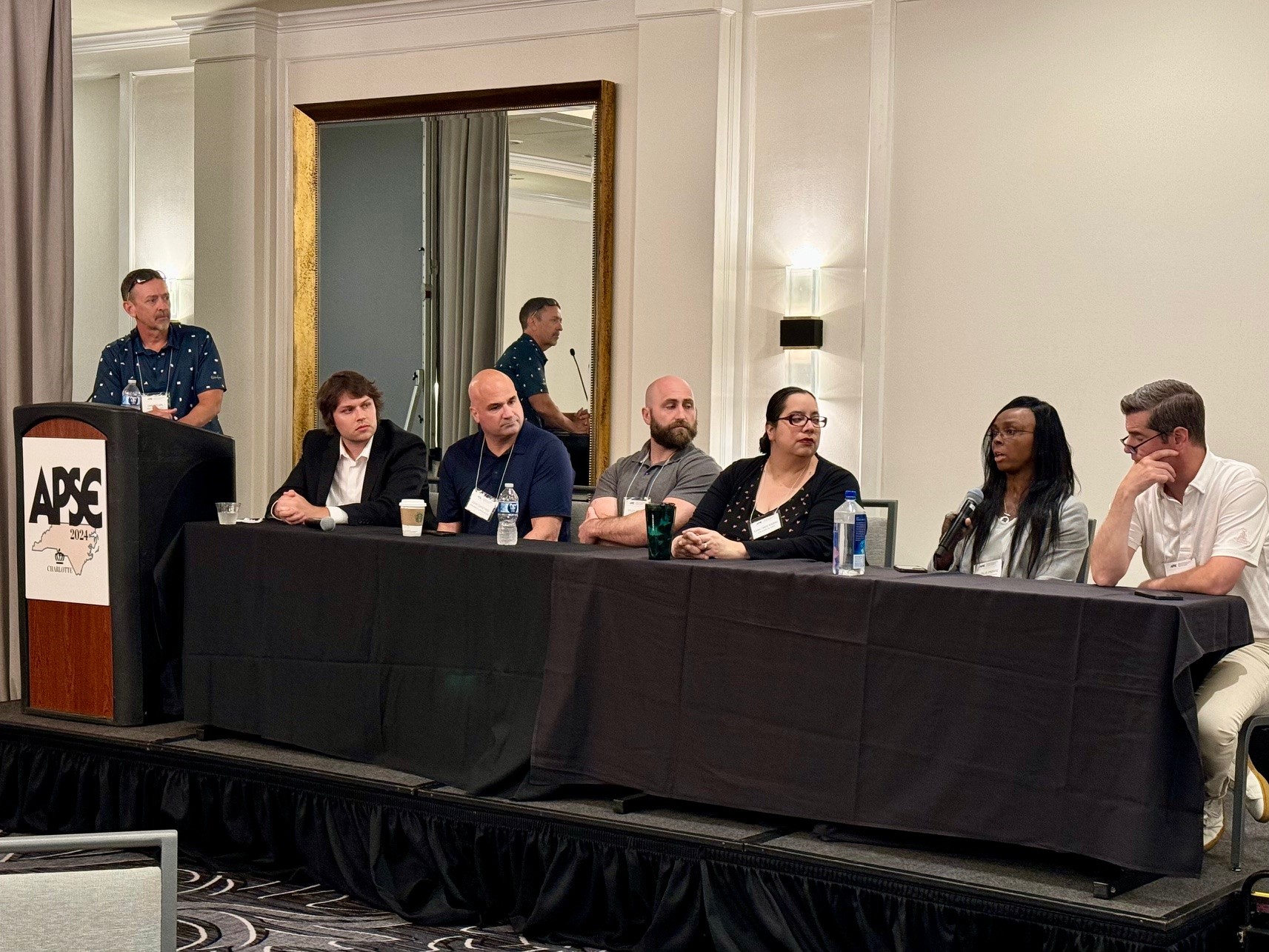
For the array of APSE Contest winners invited to speak Saturday at the “How We Did It” panel discussion at the APSE Summer Conference in Charlotte, N.C., their paths to the podium required their stories to stand out among the competition and resonate with their readership.
During the discussion, each of the six speakers shifted from uncovering original stories about their beats to uncovering the insights behind the reporting and planning processes that set those stories apart. The panel included writers Jeff McLane of the Philadelphia Inquirer, John Canzano of JohnCanzano.com, Tyler Dunne of Go Long TD and Chapel Fowler of The State (Columbia, S.C.) along with editors Iliana Limón Romero of the Los Angeles Times and Natalie Pierre of The Courier Journal (Louisville).
Limón Romero shared that for her sports desk, battling conventional routines and chasing atypical and insightful stories has become a necessity.
“We have to say no to the mundane,” Limón Romero said. “We have to say no to the things where there [are] a lot of other people covering it. … We’re trying to be disciplined about, across the board, saying, ‘Is it worth your time? Is it worth the reader’s time?’ ”
The award-winning reporting honored on the stage reflected that enthusiasm for finding unique stories.
McLane spoke about his creative approach to reporting a feature on the Eagles’ Dom DiSandro, which included veering outside of the usual public-relations route and using connections from across his career as a reporter to shine light on a mysterious figure in the organization. Dunne, another veteran NFL reporter, shared how he navigated a delicate topic — the journey of wide receiver Zay Jones after a mental-health crisis — and the compassion and trust the story required.
In both cases, the journalists’ reporting about stories without prior in-depth coverage attracted the attention of readers and the APSE Contest judges.
“Typically, I know those stories are going to hit because they’re exclusive,” McLane said. “The exclusivity in a lot of these stories is what makes them special, and that’s kind of my job as a reporter. … Those are the stories that I think people are craving and want more of, and thankfully I have bosses that allow me to do that.”
Fowler and Canzano received first-place honors for their writing about college athletics, from Fowler’s coverage about a man that appeared in the background in Clemson football broadcasts to Canzano’s columns about the Pac-12’s sudden demise and Pat McAfee’s comments about Washington State and Oregon State.
“Anything that’s different gets on the radar for reporters and editors,” Fowler said. “There’s a shared excitement about working on something like that.”
Speaking from an editor’s perspective, Limón Romero and Pierre discussed how outlets can encourage their reporters to differentiate their articles from the rest of the media scrum and present the reporting to subscribers.
“It’s really just, how can we support you, how can we help you plan this out?” Pierre said. “You might have all of this knowledge, but how do we present it in a way where we can meet readers where they’re at?”
After dissecting their work, the six panelists addressed a range of journalism-related topics, from work-life balance and journalistic influences to incorporating multimedia components in major stories and prioritizing potentially difference-making stories above typical press conference and game coverage.
Through each perspective, the panelists conveyed their appreciation for the reporting process and the impact of high-quality storytelling.
“There’s pressure, there’s stress, but I think everybody in this room loves it,” Dunne said. “You need that adrenaline rush if you’re in sports media.”