By Andre C. Fernandez
Steve Miller Band’s classic, “Fly Like an Eagle,” famously begins with the lyric: “Time keeps on slippin’ slippin’ slippin’ into the future.”
Not letting precious time slip away is a constant challenge for sports journalists.
Whether they are reporters, editors, photographers or producers, many in the industry know the struggle when it comes to managing their time efficiently.
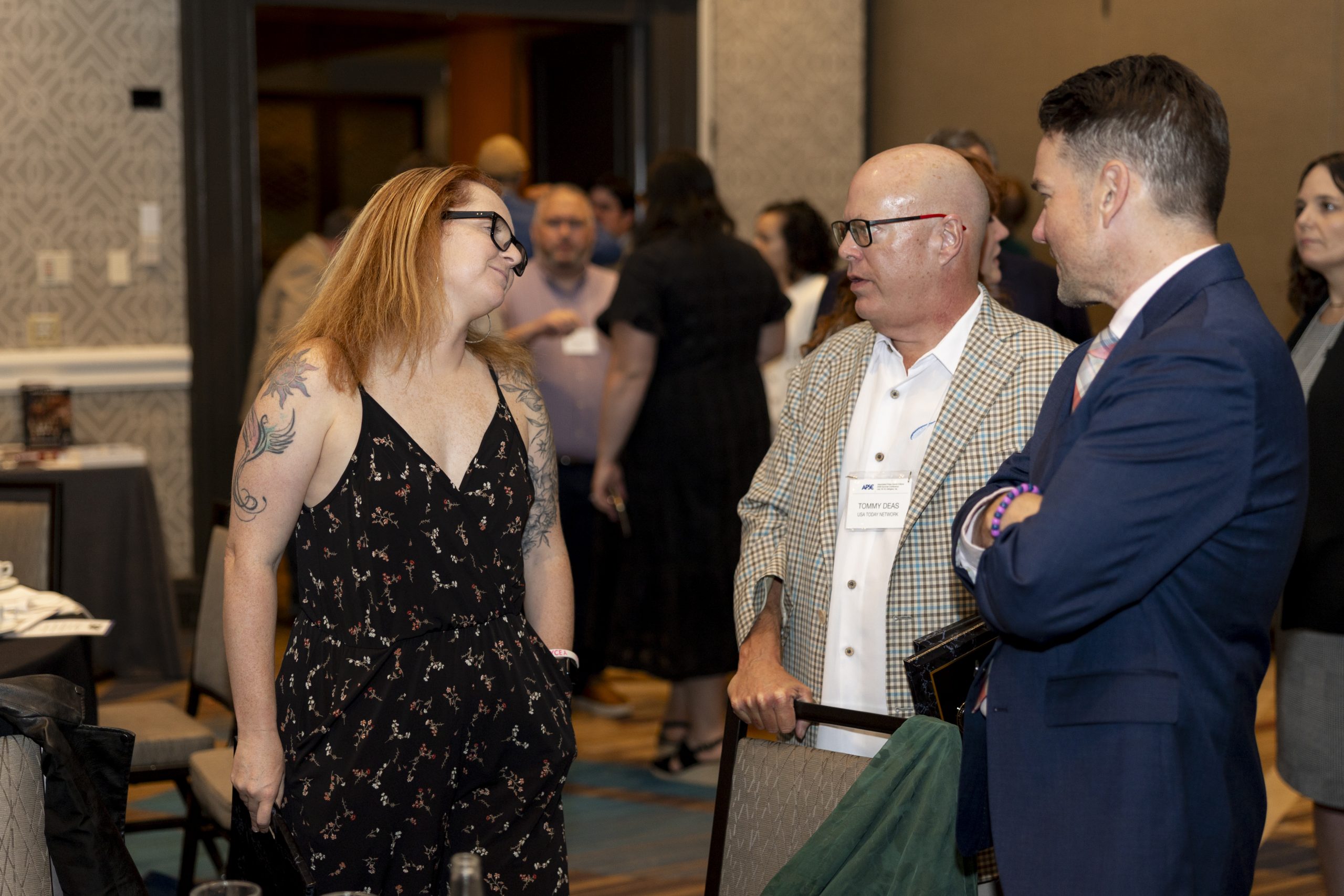
That’s why USA Today award-winning journalist Tommy Deas quoted that song to begin one of the more useful panel discussions at last week’s Associated Press Sports Editors Summer Conference, held at the Crystal Gateway Marriott in Arlington, Virginia.
Deas, who once won a Pulitzer Prize while at the Tuscaloosa News for its team coverage of the 2011 tornado that killed more than 40 people and devastated the local community, works as Sports Director/Senior Sports Strategist for the Center for Community Journalism in the USA TODAY Co.
He moderated the session titled, “Time Management: How to maximize our most precious resource,” which included a panel of three more award-winning journalists – Amie Just, Rod Beard and Chris Thomas.
Just is a sports columnist at the Lincoln Journal Star in Nebraska, who has earned 27 Top 10 APSE awards across nine categories in four divisions. A University of Kansas alum, Just worked in Montana and Louisiana.
Beard is the Senior Sports Editor for pro/college sports at the Atlanta Journal-Constitution. Beard spent 23 years prior at The Detroit News, where he was the sports editor and previously covered the Detroit Pistons for seven years. He also previously covered University of Michigan basketball.
Thomas, who is from East Tennessee, is the Executive Editor, Sports of the USA Today Network. His previous stops include stints at the Detroit Free Press, USA Today Network South Region, Alabama Media Group, Knoxville News Sentinel and the Clarion Ledger in Jackson, Mississippi.
The three offered those in attendance, which included numerous peers in the industry as well as a number of aspiring student journalists, glimpses into the approaches each takes when it comes to time management, which has helped them achieve their respective success.
The first was having an efficient planning system, whether it means using daily task lists, notebooks, or calendar reminders.
Just, in particular, gave an example of this by sharing a detailed day-by-day and hour-by-hour plan with listed tasks and an estimated timeframe on how long it should take to complete each. These included both professional and personal goals.
“On Monday mornings over breakfast, I look at my calendar, which is color-coordinated with every color that Google offers, and I have a meeting with myself,” Just said. “It lets me center and get organized for my week. If I don’t do that, I’d be lost. If you look at things too big-picture, you’re going to lose the small stuff.”
Another important topic was how to prioritize short-term and long-term deadlines.
As part of detailed planning, figuring out what needs to be done sooner rather than later and what can wait and balancing that with what can realistically be done is paramount.
An important message was for journalists to be conscious about including time for recovery and self-care within their busy schedules.
“One thing that’s really important is my wellness on that day; if I got three hours of sleep, let’s say, it’s just knowing how much you’ll be able to do,” Beard said. “In terms of productivity, I’d rather you take a day off and be 80% tomorrow than be 20% today, 20% tomorrow and 30% the next day.”
These can include blocking calendars for recovery days or important personal events, or just maintaining healthy routines, whether they are dealing with light or heavy workloads.
“Sometimes the best thing for my organization is for me to take a step back for a long weekend or an extra day,” Thomas said. “I promise the company will get it back in return, and they do, over and over again. This is a hard era we are in. So, the ability to step back and think and lead and to think about the quality of leadership that we’re getting, I think is as valuable as anything else.”