By James Jackson / APSE Diversity Fellows
College athletics are changing by the day.
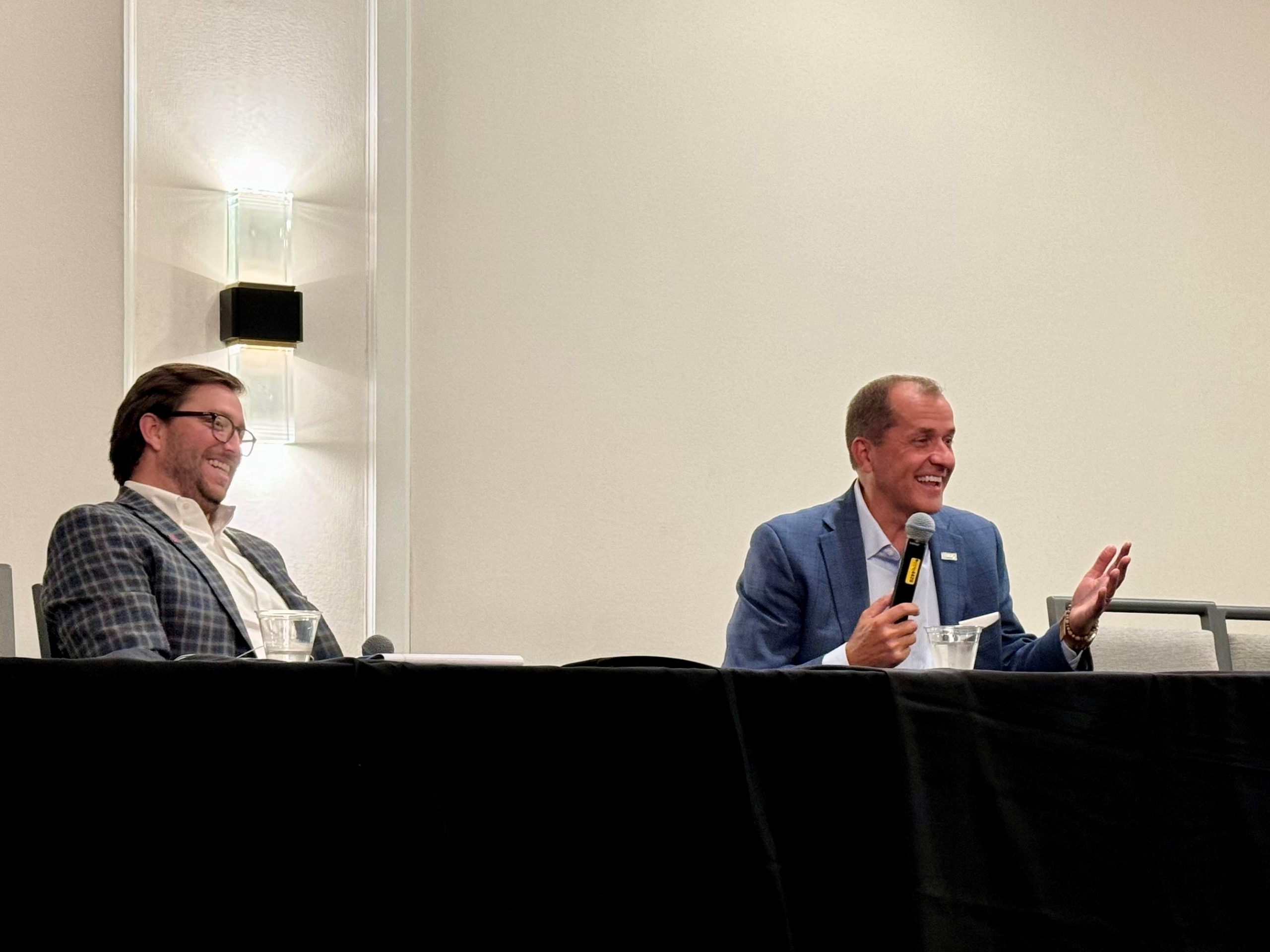
That sentiment permeated through ACC Commissioner Jim Phillips’ thoughts Thursday when he spoke at the annual APSE Summer Conference in Charlotte, N.C. Phillips agreed to sit down with the organization advocating for diversity and growth in sports journalism.
“There’s going to be a reset in college sports,” Phillips said Thursday. “And it’s OK. It doesn’t mean it’s going to be the end of college sports, by any means. It’s going to look different.”
The biggest and most imminent change to college athletics will be financial, namely with the NCAA’s recent House settlement, which will allow colleges and universities to pay athletes. The two-part agreement must be approved by federal court and will allow entities such as Phillips’ Atlantic Coast Conference, the Big Ten, the Big 12, Pac-12 and Southeastern Conference to directly pay athletes. Each conference will be allowed to distribute $20 million a year to college athletes as the NCAA adopts a new revenue-sharing model. Athletes who competed before July 2021, when the NCAA allowed players to earn money through name, image and likeness, will be paid through a $2.75 billion settlement.
Due to television contracts and broadcast rights, the settlement will most likely result in football and men’s basketball players at large programs being paid. It’s possible for women’s basketball players to be paid as well. Likewise for athletes in soccer, tennis, track and other sports short on generating revenue, but it remains uncertain how schools will proceed.
The pivotal shift of college athletes being paid means prioritizing longstanding protections for the NCAA, which Phillips acknowledged when asked about protecting Title IX as college sports continue growing.
“We have to protect Title IX,” he plainly prefaced. “And the ACC in particular has been what I believe to be a leader. We offer 28 sports, as many as any FBS conference. Fifteen of those sports are women’s sports … so whether it’s what the model looks like moving forward, with the settlement, or whether it’s NIL moving forward, there has to be equity there. There has to be.”
Although the NCAA is embracing change, does that mean all money could be good money? Probably not. In March, two days after the NBA started investigating now-banned player Jontay Porter’s prop-betting, NCAA President Charlie Baker began pushing states with legalized wagering to ban prop bets on college athletes. Also in March, U.S. integrity, a sports betting watchdog, flagged a Temple-UAB matchup for unusual betting activity due to unexplained shifts in the points spread, per Sports Illustrated. Phillips stated his desire to protect athletes and schools from pop bets that are undermining the NCAA’s changing landscape.
“Absolutely, that is a runaway train, if we can’t get our hands on that. Props are definitely — that’s a major concern. … I’m really concerned. I’m very concerned about the safety of student-athletes, certainly concerned about game fixing.”