

By Dominic Faria
The college sports landscape is changing at a rapid pace, and the coverage of college sports is evolving with it.
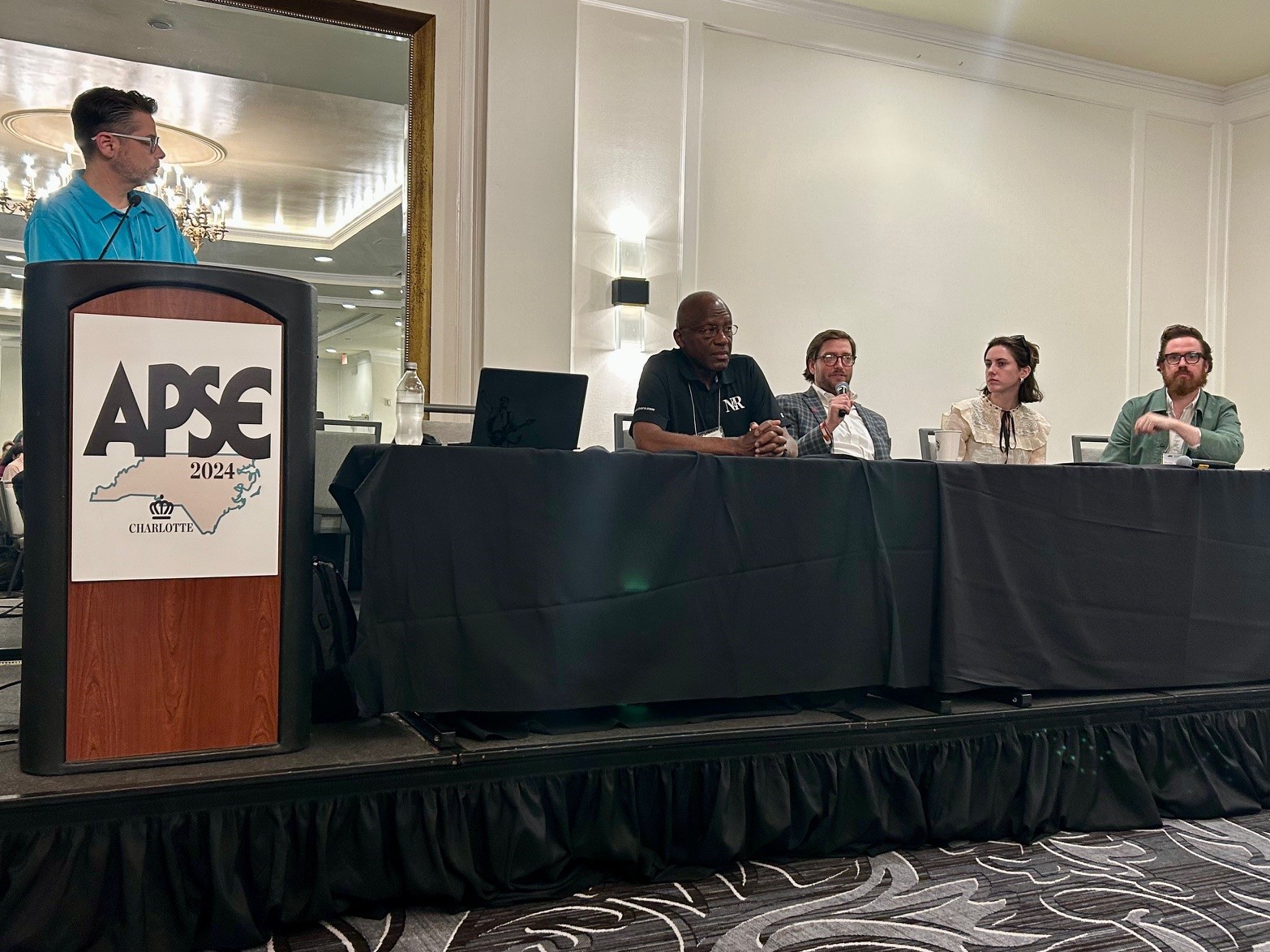
“The chaos of college sports,” a town hall kicking off the 2024 APSE Summer Conference on Thursday in Charlotte, N.C., featured an in-depth panel discussion on the state of collegiate athletics and the sports journalists’ role in reporting about the industry.
Moderated by veteran sports editor Perryn Keys, the panel included Andrew Carter, reporter at the Raleigh News & Observer and The Charlotte Observer; Skip Foreman, regional sports editor for Lee Enterprises; Ben Portnoy, college sports reporter for Sports Business Journal; and Shelby Swanson, a rising senior at the University of North Carolina and former sports editor at The Daily Tar Heel.
“Nothing surprises me in college athletics anymore,” Carter said. “There are no allegiances anymore, there’s no loyalty. No one cares about tradition or rivalries or any of this stuff. It’s all about the craven pursuit of money. That’s the only thing that really matters.”
With monumental shifts in conference realignment; name, image and likeness and transfer portal regulations already occurring; and added upheaval with athlete compensation on the horizon, the foundation of college athletics is experiencing a fundamental transformation. For reporters it often means attention gets pulled away from the playing field and concentrated on untangling the intricate web of media-rights deals, roster changes and lawsuits that are affecting college programs across the country.
The sheer complexity and uncertainty of the landscape can be challenging to understand and report on. For many of the panelists, finding and talking with trusted experts who can break down convoluted concepts and processes have proven to be a tremendous asset.
“We need to have experts on hand to speak to them about the ramifications in general, so we can explain it to [our audiences],” Foreman said. “I think a lot of this stuff is going over everybody’s head, and the key for us as journalists and sports journalists is to ensure that we’re explaining it at its basic and most simple level.”
But beyond these more existential questions facing college athletics, the panel also touched on issues relating to how to tackle the more traditional day-in, day-out game coverage that comes with being a college sports reporter in today’s media environment.
Foreman sees it as a need to escape the granular details of how a particular game played out and instead narrow the focus on the people and moments that made it noteworthy.
“We can’t just give people a straight game story,” Foreman said. “We’ve taken on the idea that we have to tell people stories, and I think sports has to do that.”
To tell these kinds of human-focused stories, it often requires an extra level of reporting creativity, especially as more high-profile athletes and coaches become harder to reach through traditional channels than ever before.
“It becomes a question of what you need,” Carter said. “To me, that means parents, high school coaches — it’s good to be outside of the access bubble as much as you can.”


