By Lauren Jennings / APSE Diversity Fellows
Diversity has been a hot topic as of late, and rightfully so.
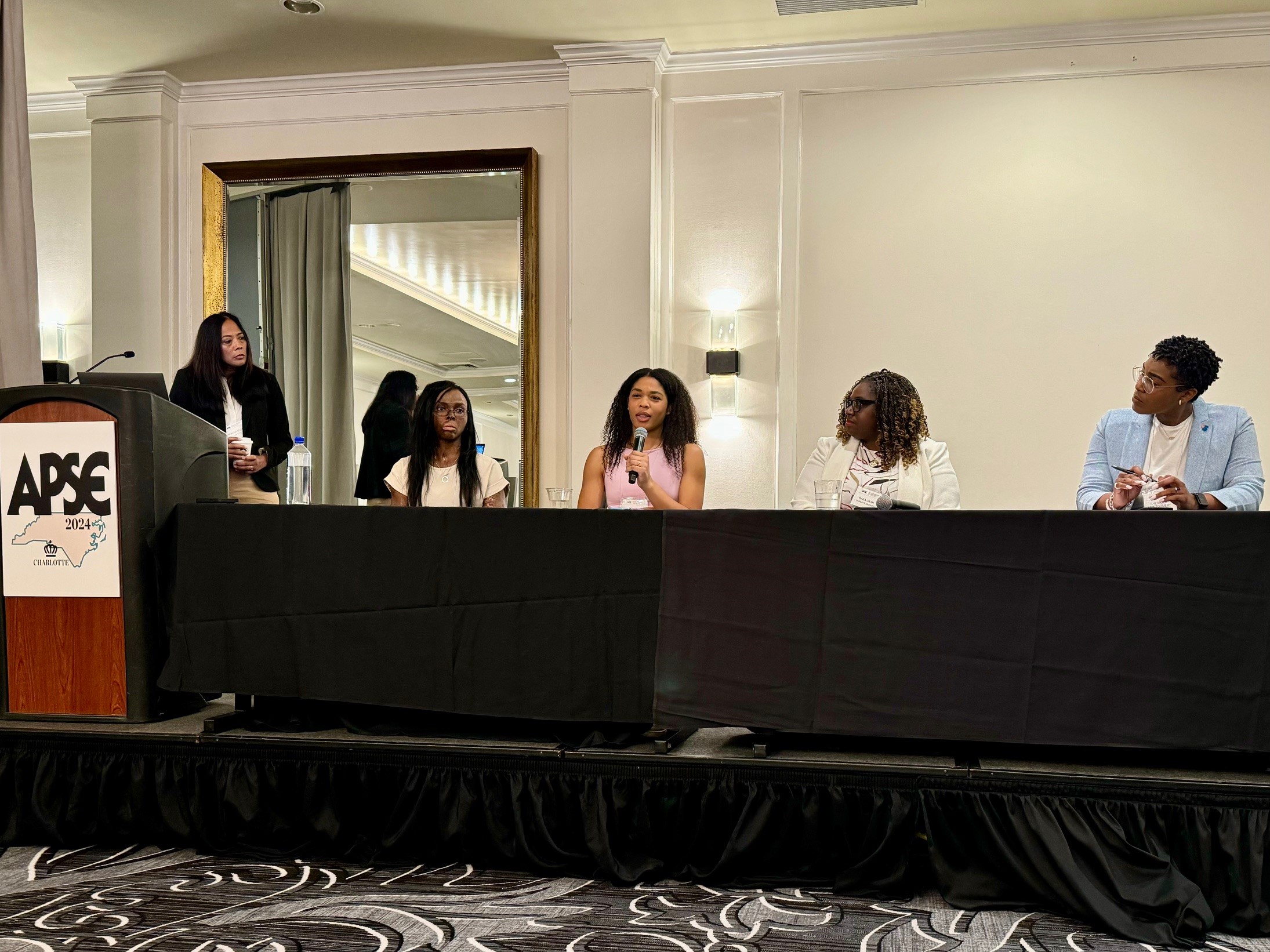
On Friday during the “Why diversity is important as ever” general session at the APSE Summer Conference in Charlotte, N.C., moderator Roxanna Scott said, “This topic feels like a lot right now. It is very much in the news beyond sports.”
Scott is the executive editor and vice president at USA TODAY Sports and an APSE Foundation board member.
The session included four panelists: Rana Cash, executive editor of The Charlotte Observer; Callie Lawson-Freeman, a 2024 APSE Diversity Fellow who covers the Las Vegas Aces and UNLV for the Las Vegas Review-Journal; Natalie Pierre, sports director at The Courier-Journal in Louisville, Ky.; and Big South Conference Commissioner Sherika Montgomery.
The session focused on diversity and its impact on journalists and the newsroom.
“It is a very tense climate right now,” Cash said as she explained how diversity, equity and inclusion (DEI) has impacted reporters, newsrooms, states and even legislation the past few years.
According to edtrust.org, “more than 45 bills were introduced across state legislatures targeting diversity, equity, and inclusion (DEI) efforts in higher education” in 2023.
Panelists were asked about their responsibility in diversifying hires and coverage, including their approach and potential pushback.
“We aren’t really where we could be or should be when it comes to diversity as an industry,” Pierre said. She elaborated on the importance of hiring diverse candidates in roles where they are likely to have greater impact, including editor and columnist roles.
When it comes to landing the right hire, Montgomery believes “it’s about having the diversity of experiences.” Regarding coverage, she said it’s important to give reporters “freedom of creativity.”
Panelists were also asked about retention. Some leaders have struggled to keep diverse candidates around, and others have found ways to keep staff motivated – such as rewards that include financial incentives and social events.
“I have found the money, while appreciated, was not the motivation,” Cash said. “It was the public celebration, consistency in doing it. It seems to carry more weight coming from peers as opposed to just me.”
Lawson-Freeman and others encouraged editors to provide consistent feedback to keep dedicated reporters around.